

 ITA
ITA  ENG
ENG SPAN
SPAN FR
FR NL
NL GER
GER FI
FI

 ENG
ENG  ITA
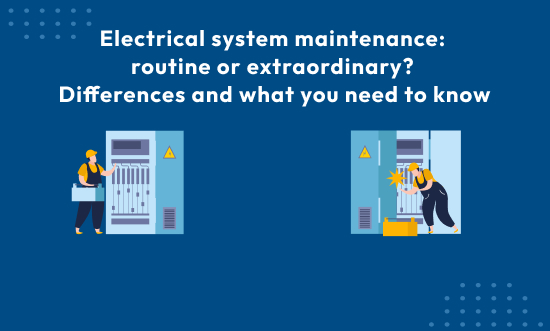
ITA Electrical system maintenance: ordinary or extraordinary? Differences and what you need to know
Why electrical system maintenance is essential
The maintenance of electrical systems is an essential activity to ensure safety, operational continuity, and regulatory compliance in any building, whether residential or industrial. A well-maintained electrical system reduces the risk of failures, fires, and service interruptions, protecting people and assets. There are two main types of intervention: ordinary maintenance and extraordinary maintenance. Understanding the differences is crucial to properly manage obligations and responsibilities.
Ordinary and extraordinary maintenance: definitions and meaning
Ordinary maintenance includes all routine operations and minor repairs required to keep the electrical system efficient, without changing its structure or intended use. According to DM 37/08 and CEI standards, this category includes interventions that do not alter the essential characteristics of the system.
Extraordinary maintenance, on the other hand, involves substantial modifications, regulatory upgrades, extensions, or significant replacements of system components. These interventions may involve structural changes and require specific skills and documentation obligations.
Operational differences: practical examples
To distinguish between ordinary and extraordinary maintenance, it is useful to consider some practical examples:
- Ordinary maintenance: replacement of light bulbs, sockets, switches, small electrical components, repair of damaged cables without changing their routing.
- Extraordinary maintenance: complete refurbishment of the electrical system, expansion with new lines or panels, compliance upgrades with new safety regulations, installation of additional protection systems.
For property managers, identifying the type of intervention is essential to properly plan activities and comply with legal obligations.
Who can carry out the work and documentation obligations
Ordinary maintenance can be carried out by qualified internal personnel or by technicians who are not necessarily certified, provided they have the required skills.
For extraordinary maintenance, it is mandatory to engage a certified installation company in accordance with DM 37/08. In these cases, it is necessary to produce and retain the declaration of conformity for the work carried out, along with other technical documentation required by regulations.
Regulatory references and responsibilities
The main regulatory references are DM 37/08 (formerly Law 46/90), Legislative Decree 81/08 on workplace safety, and DPR 462/01 for periodic inspections of systems.
Owners, administrators, and technical managers are required to ensure proper maintenance and system safety. Failure to perform or improper maintenance may result in administrative penalties, civil liability, and criminal liability in the event of accidents or injuries.
Maintenance planning and traceability: an essential requirement
A structured maintenance plan makes it possible to reduce risks, optimize costs, and ensure regulatory compliance. Traceability of performed activities is essential to demonstrate compliance and prevent errors or oversights. Manual management often leads to scattered data, lack of history, and human errors that can compromise safety.
Maintenance digitalization: the benefits of Digital Twin and CMMS
The adoption of digital platforms such as Digital Twin and CMMS enables data centralization, intervention planning, system status monitoring, and improved collaboration between teams and suppliers. The main benefits include:
- Operational efficiency through process automation
- Reduction of errors and oversights
- Greater safety and regulatory compliance
- Complete history of performed activities
UTwin focus: an integrated solution for maintenance management
A platform such as UTwin integrates Digital Twin and CMMS functionalities, offering simple and intuitive management of all maintenance activities. UTwin enables real-time data collection, intervention planning, system monitoring, and automatic generation of required documentation, improving collaboration among all involved stakeholders.
Effective maintenance management: the key to safety and cost savings
Correctly classifying ordinary and extraordinary maintenance interventions is essential to comply with the law, ensure safety, and optimize costs. Process digitalization is now the most effective solution for modern, safe, and efficient management of electrical systems.


Informative Material