

 ITA
ITA  ENG
ENG SPAN
SPAN FR
FR NL
NL GER
GER FI
FI

 ENG
ENG  ITA
ITA The Benefits of BIM and Digital Twin for Airports
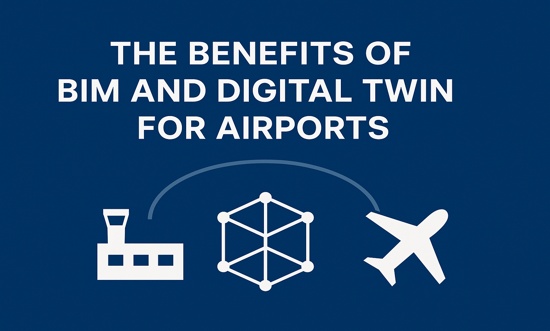
Airports are among the most complex infrastructures, combining technological systems, logistics, retail areas and continuous passenger flows. Efficient management requires a comprehensive, real-time view of all assets. In this scenario, BIM (Building Information Modeling) and Digital Twin technologies are transforming how airports are designed, operated and maintained.
So, what are the benefits of BIM and Digital Twin for airports?
BIM provides a detailed 3D digital model that brings together all data about buildings, facilities and spaces. It supports coordinated planning, maintenance scheduling and lifecycle management across all airport areas.
The Digital Twin connects this model to real-time IoT data, enabling predictive maintenance and performance optimization. Managers can track equipment status, monitor energy consumption and improve safety through a centralized digital platform.
Key advantages for airports include:
- Predictive maintenance of critical infrastructure;
- Reduced energy consumption and emissions through data-driven optimization;
- Improved safety for passengers and staff;
- Smarter space management for terminals, gates and facilities;
- Complete traceability of assets and maintenance activities;
- Seamless integration with CMMS and IoT systems.
By combining BIM and Digital Twin, airports evolve into dynamic digital ecosystems capable of responding intelligently to changing conditions.
UTwin integrates BIM, Digital Twin, CMMS and IoT in one platform for intelligent airport management. With UTwin, operators can visualize assets in 3D, monitor systems in real time and achieve higher efficiency and sustainability across all operations.


Informative Material