

 ITA
ITA  ENG
ENG SPAN
SPAN FR
FR NL
NL GER
GER FI
FI

 ENG
ENG  ITA
ITA Healthcare facility management and maintenance: complete guide and software
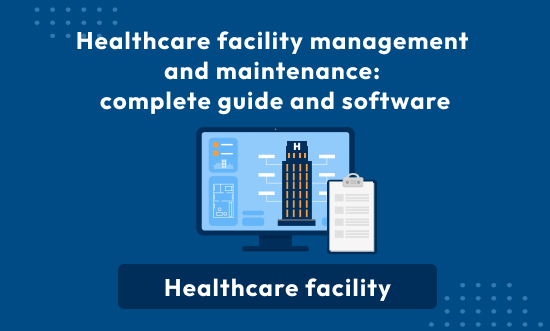
Management and maintenance in healthcare facilities: a pillar for safety and efficiency
The management and maintenance of healthcare facilities is essential to ensure patient safety, service continuity and regulatory compliance. An efficient system reduces risks, optimizes costs and ensures that every environment is always ready to meet clinical and operational needs.
Maintenance challenges in the healthcare sector
Healthcare facilities face unique challenges in maintenance management:
- Strict regulations and mandatory periodic inspections
- Patient and staff safety as an absolute priority
- 24/7 operational continuity with no service interruptions
- Management of critical assets such as systems, medical devices and infrastructure
- Traceability and documentation of every intervention
These elements make healthcare maintenance a complex process that requires advanced tools and qualified personnel.
Types of maintenance: corrective, preventive, predictive
Different maintenance strategies are applied in healthcare facilities:
- Corrective maintenance: interventions performed after a failure. Advantage: immediate problem resolution. Limitation: risk of interruptions and unexpected costs.
- Preventive maintenance: scheduled activities to reduce the risk of failures. Advantage: higher system reliability and fewer emergencies.
- Predictive maintenance: use of data and sensors to anticipate failures. Advantage: cost optimization and targeted interventions only when needed.
The combination of these strategies helps maintain high standards of safety and functionality.
Regulations and compliance: what the law requires for healthcare facilities
Italian and European regulations impose precise rules for management and maintenance:
- D.P.R. 254/2002: management and inventory of movable assets and fixed assets
- Regulations on system and medical device safety
- Mandatory traceability and digital documentation of interventions
- Periodic audits and inspections by health authorities
Digitalizing documentation is essential to ensure compliance and simplify inspections.
Maintenance digitalization: from Excel sheets to Digital Twin and CMMS
Traditional management using Excel sheets or paper documents is no longer sufficient to meet modern needs. Today, healthcare facilities rely on:
- Data centralization in a single accessible system
- Process automation for planning and monitoring
- Collaboration between departments and external suppliers
- Complete traceability of every asset and intervention
The adoption of CMMS (Computerized Maintenance Management System) and Digital Twin software makes it possible to:
- Real-time visualization of system and equipment status
- Scenario simulation and proactive intervention planning
- Error reduction and downtime minimization
- Resource and operating cost optimization
Digitalization represents the real leap forward for healthcare maintenance management.
What CMMS software can do for healthcare
A CMMS dedicated to healthcare facilities offers advanced features for integrated management:
- Asset management: complete registry of systems, devices and infrastructure
- Automatic planning of routine and extraordinary maintenance interventions
- Ticketing and request management from staff
- Energy monitoring and consumption control
- Detailed reporting for audits and performance analysis
- Integration with other systems (BMS, IoT, ERP, HIS)
- Document management and digital archiving of certifications
- Mobile access for technicians and operators on the move
CMMS software improves traceability, intervention timeliness and regulatory compliance, reducing errors and inefficiencies.
The added value of the Digital Twin in healthcare management
The Digital Twin is the real-time digital replica of a physical facility. In healthcare, it offers decisive advantages:
- 3D visualization of spaces, systems and assets
- Simulation of changes and their impact on environments
- Real-time monitoring of parameters and operating conditions
- Space optimization and workflow improvement
- Remote control and centralized management
- Cost reduction through targeted and planned interventions
The Digital Twin transforms healthcare facility management, making it more intelligent, predictive and sustainable.
How to choose the right software: criteria and best practices
To select the most suitable management and maintenance software, it is essential to evaluate:
- Scalability and adaptability to facility size
- Ease of use and fast onboarding
- Integration with existing systems
- Technical support and training
- Guaranteed regulatory compliance
- Transparent and sustainable costs
Best practices for implementation:
- Involve all departments from the beginning
- Plan a clear and realistic roadmap
- Invest in staff training
Practical case: how UTwin supports healthcare facility management and maintenance
UTwin is an innovative solution for the integrated management of healthcare facilities. Thanks to data centralization and 3D visualization via Digital Twin, it enables:
- Manage assets and maintenance in a coordinated and transparent way
- Monitor system status in real time
- Facilitate collaboration between technical, administrative and clinical departments
- Reduce onboarding time and simplify adoption
- Ensure regulatory compliance and traceability of every intervention
- Optimize operating costs through predictive and integrated management
UTwin stands out for its ease of use, flexibility and ability to integrate data and processes into a single platform.
Innovating healthcare management: a strategic opportunity
Investing in digital solutions for healthcare facility management and maintenance means improving safety, efficiency and sustainability. Evaluating advanced tools such as CMMS and Digital Twin is the first step to addressing industry challenges and ensuring quality services. Exploring these opportunities can make a real difference for the future of your facility.


Informative Material