

 ITA
ITA  ENG
ENG SPAN
SPAN FR
FR NL
NL GER
GER FI
FI

 ENG
ENG  ITA
ITA Predictive maintenance: what it is, advantages and examples, differences from proactive maintenance
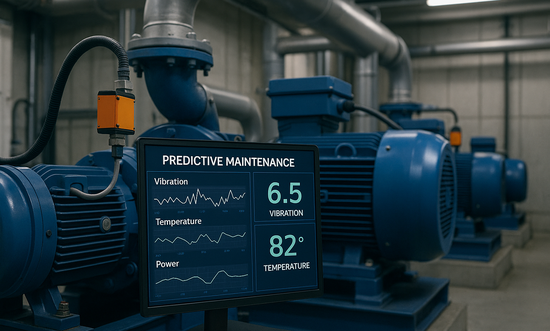
Predictive maintenance: the new frontier of efficiency
Predictive maintenance represents one of the most relevant innovations in the field of plant and infrastructure management. Thanks to the integration of digital technologies and advanced monitoring systems, this strategy allows for anticipating failures and optimizing resources, reducing waste and costs. In a context increasingly oriented towards Industry 4.0, predictive maintenance is established as a key solution to ensure operational continuity and competitiveness.
What is predictive maintenance
Predictive maintenance is an approach based on the analysis of data collected in real-time from systems, via sensors and IoT devices. The goal is to predict precisely when and where anomalies or failures will occur, so as to intervene only when necessary. Unlike reactive maintenance (which acts after the failure) and preventive maintenance (which follows fixed intervals), predictive maintenance is based on reliable forecasts and targeted interventions, minimizing interruptions and unnecessary costs.
How predictive maintenance works
The functioning of predictive maintenance is divided into several phases:
- Data collection: sensors installed on assets monitor parameters such as vibrations, temperature, energy consumption, and wear.
- Advanced analysis: data is processed by artificial intelligence software and machine learning algorithms, which identify patterns and signals of possible anomalies.
- Failure prediction: the system signals at-risk components in advance, allowing for the planning of targeted interventions.
- Digital integration: platforms like Digital Twins centralize information, facilitating management and collaboration between technical teams.
Predictive maintenance transforms asset management, moving from a reactive to a proactive and data-driven approach.
Advantages of predictive maintenance
Adopting predictive maintenance offers numerous concrete benefits:
- Reduction of unscheduled downtime: fewer interruptions and greater operational continuity.
- Maintenance cost savings: interventions only when necessary, eliminating waste and unnecessary maintenance.
- Increase in asset lifespan: constant monitoring and timely interventions prevent serious damage.
- Safety improvement: early identification of anomalies reduces risks for operators and plants.
- Resource optimization: efficient activity planning and reduction of operational costs.
- Sustainability: less waste of materials and energy resources.
Predictive maintenance allows for faster and more informed decision-making, improving the overall efficiency of the organization.
Practical examples and use cases
Predictive maintenance finds application in numerous sectors:
- HVAC systems: monitoring compressors and fans to prevent failures and optimize consumption.
- Elevators and escalators: analysis of vibrations and usage cycles to schedule interventions only when necessary.
- Energy systems: control of generators, transformers, and electrical panels to avoid blackouts and extend plant life.
- Manufacturing industry: sensors on machinery to anticipate breakages and reduce downtime.
Numerous companies have already achieved significant savings and greater plant reliability through the adoption of predictive strategies.
Differences between predictive and proactive maintenance
Confusion often arises between predictive, proactive, and preventive maintenance. Here are the main differences:
- Preventive maintenance: interventions scheduled at regular intervals, regardless of the actual state of the asset.
- Proactive maintenance: actions aimed at eliminating the causes of failures, often based on historical analysis and best practices.
- Predictive maintenance: use of real-time data and predictive algorithms to intervene only when necessary, accurately anticipating failures.
Predictive maintenance represents the most advanced evolution because it allows for optimizing time, costs, and resources through the intelligent use of data.
Requirements and challenges for implementation
To adopt predictive maintenance, the following are necessary:
- IoT sensors and devices for data collection.
- Software platforms capable of analyzing large volumes of information.
- Technical skills to interpret data and manage digital processes.
Main challenges concern initial costs, integration with existing systems, and staff training.
The role of digital platforms in predictive maintenance
Digital platforms and Digital Twins are fundamental tools for enabling predictive maintenance. These solutions allow for:
- Centralize data from sensors, IoT systems, and BMS.
- Visualize in real-time the status of assets and receive automatic notifications in case of anomalies.
- Facilitate collaboration between technical teams and decision-makers, thanks to intuitive dashboards and custom reports.
- Integrate easily with other business systems via APIs and customizable modules.
Platforms like UTwin allow for advanced predictive management, simplifying the adoption of these strategies even in complex contexts.
Predictive maintenance: the strategic choice for the future
Adopting predictive maintenance means investing in efficiency, safety, and sustainability. Thanks to next-generation digital platforms like UTwin, it is possible to transform asset management and obtain lasting competitive advantages. Choosing a predictive approach today is the key to building a more reliable and performing future.


Informative Material