

 ITA
ITA  ENG
ENG SPAN
SPAN FR
FR NL
NL GER
GER FI
FI

 ENG
ENG  ITA
ITA EAM, CMMS, CAFM: the main differences
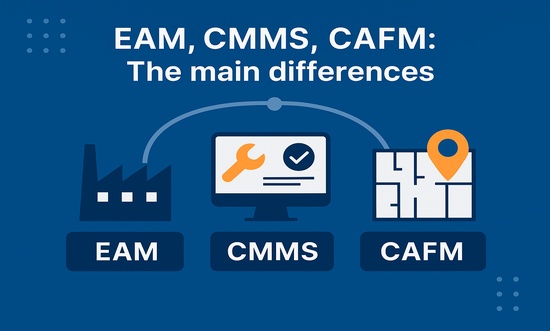
In the world of asset management and maintenance, three acronyms often come up: EAM, CMMS and CAFM. Sometimes they are used as if they were synonyms, but in reality they refer to very different tools, each with specific goals. Understanding these differences is crucial to choosing the right software for your organization.
What is a CMMS? A CMMS, Computerized Maintenance Management System, is software dedicated to operational maintenance. It digitizes processes that would otherwise be manual or managed with spreadsheets. With a CMMS you can create work orders, schedule preventive and corrective tasks, track the history of your assets and manage spare parts inventory. What is a CMMS used for? It helps reduce equipment downtime, optimize technicians’ productivity, and give a clearer view of daily maintenance activities.
What is EAM? EAM, Enterprise Asset Management, takes a broader approach. It is not limited to maintenance but covers the entire lifecycle of assets: from acquisition, through operations, to disposal. It integrates with company processes such as finance and procurement, providing a strategic, centralized view. What is EAM used for? It helps make long-term decisions about assets, maximize their value, and evaluate when it is better to repair, upgrade or replace equipment. That’s why it is widely used by large industrial companies and multi-site organizations.
What is CAFM? CAFM, Computer-Aided Facility Management, has a different focus: it is designed for managing buildings and spaces. It allows organizations to plan office layouts, maintain infrastructure, oversee service contracts and monitor space utilization, often with CAD drawings or BIM models. What is CAFM used for? It helps optimize facility management costs, improve the efficiency of internal services and ensure more rational use of available space.
In summary, a CMMS is ideal for companies that want to optimize operational maintenance, EAM is the right choice for organizations that need a complete and strategic view of their assets, while CAFM is the best solution for managing buildings, spaces and services. There is no “one-size-fits-all” answer: the right choice depends on your objectives, the level of complexity and the strategic vision of your organization.


Informative Material