

 ITA
ITA  ENG
ENG SPAN
SPAN FR
FR NL
NL GER
GER FI
FI

 ENG
ENG  ITA
ITA The importance of water monitoring in hotel structures: Safety, Savings, and Sustainability
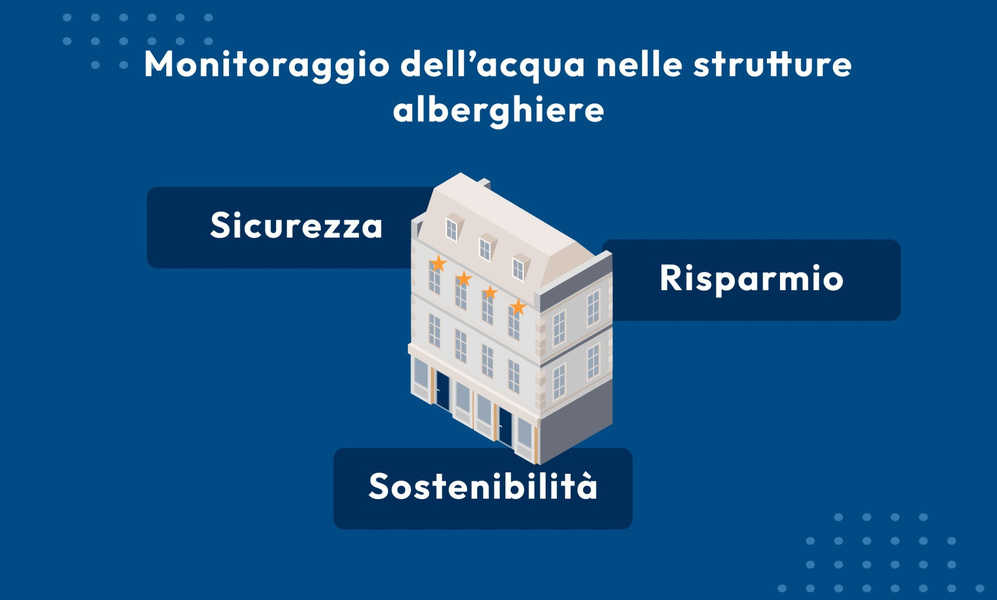
In the hospitality sector, water is not only an essential service, but represents one of the most solicited, expensive, and sensitive resources from a management point of view. According to estimates by the World Tourism Organization (UNWTO), a single hotel room can consume up to hundreds of thousands of liters of water per year.
In an increasingly stringent regulatory and market context, implementing a rigorous water monitoring system is no longer an option, but a fundamental strategic pillar.
1. Hygiene-sanitary safety and legal compliance
The complexity of hotel water networks, combined with the seasonality of occupancy that creates frequent stagnation in pipes, exposes structures to serious biological risks. Constant monitoring is the only weapon to guarantee the health of guests.
- Legionella Prevention: The Legionella pneumophila bacterium proliferates in stagnant waters between 20°C and 45°C. Monitoring the delivery and return temperatures of domestic hot water is vital to keep the system out of the danger range.
- Regulatory compliance (D.Lgs. 18/2023): Italian legislation transposes the European directive on water intended for human consumption. Hoteliers have a legal obligation to draw up a water risk assessment plan.
- Legal protection and sanctions: Failure to check chemical-physical parameters exposes the hotel management to heavy criminal and civil penalties in the event of infections among guests.
- Traceability of treatments: Continuously recording disinfectant levels (such as chlorine or chlorine dioxide) ensures that the water is microbiologically pure without being toxic or unpleasant to the smell.
2. Economic efficiency and control of operational costs
Water has a double cost for a hotel: the price of the resource itself and the energy required to heat it or pump it to high floors. Accurate monitoring acts directly on cash flows.
- Immediate detection of hidden leaks: Damaged underground pipes or faulty flush boxes can waste thousands of liters per day. IoT sensors alert maintenance before the damage is reflected in the bill.
- Optimization of high-consumption areas: Monitoring subsystems separately allows identifying anomalies in the most water-demanding departments:
- Professional kitchens and industrial laundries.
- Irrigation systems for parks and gardens.
- Wellness centers, spas, and swimming pools.
- Cooling towers and air conditioning systems.
- Analysis of night flows: An inexplicably high water consumption during night hours (when guests are asleep) is the first indicator of structural inefficiency or a failure.
3. Environmental sustainability and brand reputation
Modern travelers are extremely attentive to the ecological footprint of the structures where they stay. Transparent water management translates into a powerful marketing tool.
- International certifications: Monitoring consumption data is the fundamental prerequisite to access ecological brands such as the EU Ecolabel or Green Key certification.
- Circular economy strategies: Tracking water volumes allows designing effective recovery systems, such as the reuse of filtered gray water from showers for toilet flushing or irrigation.
- Loyalty of the green guest: Communicating the results of water savings (for example through displays in the lobby or via app) improves brand reputation and attracts a clientele willing to spend more for sustainable solutions.
Key technologies for monitoring
To move from passive to proactive management, hotel structures are equipping themselves with advanced technological tools:
- Smart Meters (Intelligent meters): Devices that send consumption data in real time, eliminating the need for manual readings.
- IoT flow and pressure sensors: Small wireless nodes positioned on critical network nodes to signal sudden pressure drops due to breakages.
- Temperature and pH probes connected to the BMS: Sensors inserted in hot water heaters that communicate directly with the structure's Building Management System to adjust boilers automatically. The use of a BMS light system improves operational and lean management with a remote cloud.
- Predictive analysis software: Algorithms that compare the historical consumption of the hotel with the occupancy rate of the rooms, highlighting any anomalous deviation.
In conclusion, water monitoring transforms a potential health threat and a volatile corporate cost into a factor of economic stability and competitiveness in the tourism market.


Informative Material